Search This Blog

Monday, February 15, 2016

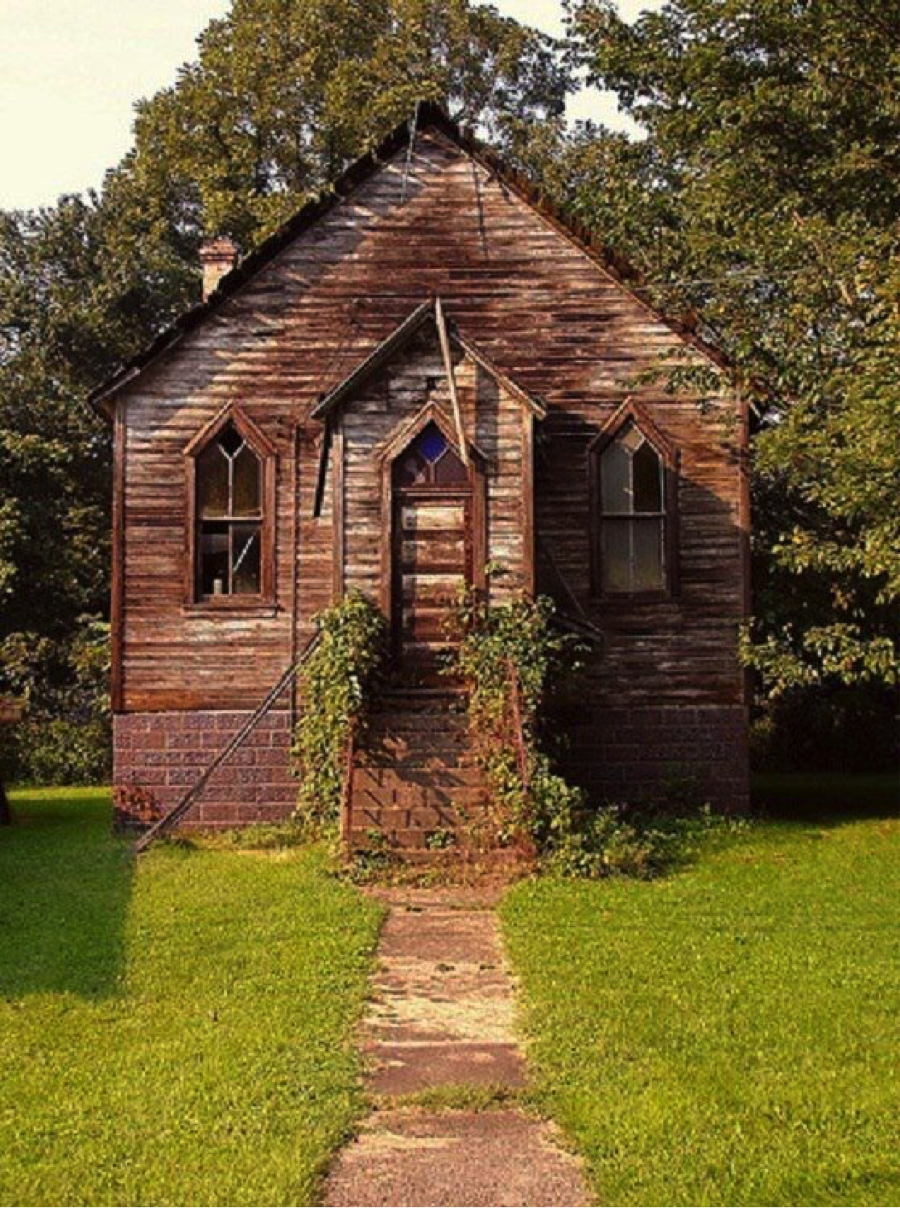
Abandoned Places


I’ve always had a thing for brokenness.  I’m drawn to broken people, broken lives.  I love the Japanese aesthetic, Wabi Sabi, which is a way of seeing beauty in brokenness.  Nothing is perfect, nothing lasts, nothing is finished.

This is probably why I’m so drawn to abandoned places.  I have a board on Pinterest for abandoned places — mansions, mental institutions, amusement parks, nuclear plants, farmhouses.  Every place has an essence, even unoccupied.  There’s something about an empty place, a place stopped in time, humans taken out of the equation. The stillness of inanimate objects and invasion of dirt, leaves and even trees, creates an echo of the past, creates the same melancholy in me as a long baleful train whistle.

Time has stopped in these places.  Memories have stopped.  But life is not stopped.

I can’t help but try to imagine the lives that once moved there.  I’ll imagine mentally picking up the trash, cleaning and straightening the curtains, fluffing pillows, vacuuming.  I add people, television sounds, music, stories, drama, and love.  But I can never get it right.  What came before is a mystery.  Where souls go when they abandon the body is even more of a mystery.

In most dream interpretation books, houses represent spirituality, like the home of the psyche.  Multi-storied houses are vast and perhaps more accommodating for old souls, etc.  There is meaning in hidden  rooms, behind locked doors, down below in the dark of the basement.


When I look at abandoned places, it’s like looking at a postcard from death.  The souls have all gone elsewhere and now there’s just stuff, soulless matter.  If the house were a repository for the soul, now the soul is gone, and the house is empty.  Like the body when we die.  The body is just stuff.  I want to donate my stuff when I die.  Why leave it to waste?

Anyway, here comes a segue…  Since I live in Autism World, I see a lot of disabled people, every kind of disability.  I see broken minds all the time, broken bodies, broken lives.  Some can not contemplate their own lives.  Which makes me wonder about the mind, the soul, the part of us that is believed by some to live on after we die.  Some believe that this part that lives on will inhabit a new and improved body, will have a  new brain.  

Will my son be whole in heaven, if there is such a place?  Will he no longer struggle?  Will there be a forever home for his beautiful spirit?
Such a scenario would bring me great comfort, but I have my doubts.

If things are above as they are below, then who’s to say we don’t have abandoned houses in heaven?  Even stars die, and the rate of star birth is slowing.  The universe is full of black holes, black throats swallowing anything nearby, an emptiness so deep as to have tremendous mass and gravitational pull.  Not even light can escape.

Julian is starting to worry about dying, about me dying.  He says he wants to be with me forever.  The first time I tried to comfort him with talk of heaven, of us being there together one day, he thought for a moment then asked, “Will we play Angry Birds?”

In other words, will we have corporeal lives?  Things around us to knock on, taste, wrap our arms around?  I think not.  But I won’t be telling my son this.  He needs reassurance, to be certain there’s a place for us, a forever home.

A place is never just a place to me.  The older, the better.  I feel the rich texture of history in the oldest places.  I’ve been known to put my nose to the walls, to reach as far as my mind is able to sense the lives that came before, to honor them.  

I did this once in an abandoned hospital.  The x-ray department was the only part of the building left operating and I was the sole employee.  Because I was rarely busy, I often took walks around the empty building.  The eeriest place was the surgical ward.  There were overturned tables and gurneys, a few tourniquets and empty glass canisters.  The walls were turquoise ceramic tile, still shiny.  The large domes of overhead lights were darkened, covered in dust.  Straggly wires protruded from broken intercom systems.

I stood for a long while in one particular suite, imagined all the life-saving surgeries that had taken place there.  I also imagined how many lives were lost, then wondered if it was truly possible for souls to literally float away from their bodies to occupy a corner near the ceiling, to watch human hands working frantically to save them.

In that moment I longed to gather all the lost souls, to give them a proper send off, say a few words in the room where they separated from their bodies or went out like a light.  I wanted to tell them someone was thinking about them, whomever and wherever they were now.  The room was so empty, so empty that emptiness felt like a heavy thing, like an entity.  The emptiness felt ancient, an unanswered ache from a bottomless forever.

Maybe this was just me feeling sorry for the dead, feeling sorry for my dead, feeling sorry for myself and everyone else slated to die one day.  I have the same haunted feeling when I look at pictures of abandoned places, when I watch a funeral procession or walk through a cemetery.  When I listen carefully to a ticking clock.

No life escapes death.


We’re told over and over again that the stuff of life doesn’t matter.  We’re told that our bodies will die, that we can’t take the stuff with us, that only the soul matters — the soul and love.  Which may be why that’s all I can think of when I look at an empty place, where neither exists.  

I pine for the knowledge of what came before.  Were there children?  A father?  What was the last meal prepared in the empty pot on the stove?  Where did the sounds go?  The laughter in the amusement park.  The screams in the asylum.  The conversations about nothing, whispers in the dark, secrets and ‘I love you’s’.  The steady hum of unanswered prayers.


The blemished walls will never tell me. But there is life there, in the cells of the inanimate, in the secrets the walls keep.

Sunday, February 7, 2016

Shrine


My collection started in 1983, the year I graduated from high school, the week my mother died.

I'd gone to the house where it happened, 1307 Bellgrove Avenue in Seabrook, Texas.  I'd moved out of this home six months prior, to start my own life.  Returning to gather things to remember her by was difficult.  The day her body was found police asked me over the phone, "Do you want to see her?"  But I couldn't.  She'd been dead for more than twelve hours, her body already rigid.  My imagination had already provided sufficient unwanted images.  I didn't want to see her that way.

When I returned to collect a few things the following week, I feared the police and coroner had left some remnant of that horrible event, perhaps part of the sandwich she hadn't finished, the glass of curdled milk or dried vomit on the chair.  It would be hard enough to view this recliner my stepfather had insisted on keeping, her chair.

I suppressed my fear and returned to the scene.  I moved toward the bookshelves behind the favorite chair where she'd been found.  My eye went straight to a prescription drug reference book.  I picked it up, saw that she had redlined the information on the drug that killed her.  I took a handful of other books, one by Dr. Wayne Dyer, Your Erroneous Zones, and another by Erma Bombeck, If Life Is A Bowl Of Cherries, What Am I Doing In The Pits?.

I avoided looking at the recliner.

In her dust-free bedroom I found favorite perfumes neatly aligned on a white dressing table -- Cache', White Diamonds and Este'.  On the master bathroom counter was a blue elastic headband once used to hold back her hair as she applied Merle Norman foundation, loose powder, and her Cover Girl signature green or blue eyeshadow.  There was a clear plastic hand mirror, a green bristle brush, a black ratting comb, a tall can of VO5 hairspray.

I opened the medicine cabinet, noticed immediately the empty prescription bottle once containing the tricyclic antidepressant, Amitriptyline.

I closed the cabinet, picked up the blue headband and moved to her closet.

Her clothing still smelled like White Diamonds.  To be close to her, I gathered my arms around several colorful blouses, buried my face in handfuls of soft perfumed fabric, and sobbed.  I'd held it together until that moment.

I pulled two of her favorite shirts from their hangers and folded them neatly, closed the closet door.  I moved back to the white dresser to collect a teddy bear pin I'd passed over earlier.  It was part of a pair, similar to one I had at home.  She'd bought these for us only two weeks earlier, asking, "Which one do you want?"  Now they could be together.

Thirty-two years later I still have these items.  I studied them the other day, noticing for the first time that the shirts came from JC Penney, one blouse hippy, the other Holly Hobby.  I could envision my mother wearing them, her cat-like elegance gliding from room to room in the Bellgrove house, down the narrow hall away from me, her head held high to conceal the chronic terror she numbed by self-medicating, overindulging, sacrificing her own power.

There are other saved items unrelated to my mother.  There's a stuffed bear commemorating a fundraiser for AIDS research; this in honor of my friend, Dr. R, who died of the disease in 1996.  There are small clay pieces crafted by my now grown son, perhaps to represent a childhood lost.  His lost teeth and those of his older sister are kept in colorful bamboo boxes lined with red silk.

There are two photographs, one of deceased cats, Max and Madison, and the other of a Vietnamese woman I never knew.  A friend took the photo in the mid-'90s during a trip to Vietnam.  When he showed me his photo album, I found this particular picture so mesmerizing, haunting, the brightness of a yellow doorway and her gracious smile belying the weariness in her eyes.  He said I could keep it.

The photo is in a jewel-toned frame which was a gift from Deedee, my best friend for eighteen years.

Deedee died in a car accident in Friendswood, Texas, 1998.  For her I keep a small Indian headdress she made from safety pins, red and black beads, strips of leather and weightless gray feathers; a rock totem of a snake representing birth, death and regeneration; a card once attached to a friendship music box which reads:  Your [sic] right there, a private nod to our soulful connection; a purple calla lily lamp with a bronze frog at the base.  The lamp, like my mother's bear pins, was a pair, one for her, one for me.

A few years ago my youngest daughter came home with a Spanish assignment to celebrate Dia De Los Muertos.  I asked if she wanted to honor the grandmother she lost twenty-three years before her birth, so she did.  She decorated a small square box with a photo of my mother, brightly patterned tape and colorful glass stones, then we added cut tissue paper, dried flowers and other personalized essentials:  a Butterfingers candy bar, a copy of my mother's favorite Serenity Prayer, a brief description of this lovely 5'2" woman who wrote songs and poetry and who, for as long as I can remember, took in countless stray dogs and people.

The following year my daughter honored my brother, David.  In his box we placed photographs of Bruce Lee, hot sauce, nunchucks and a photo of the Beatles album, Sgt. Peppers Lonely Hearts Club Band.  Since learning more about his life, I would add photographs of the Mojave Dessert, its Joshua Trees and creosote bushes, the slate strips of endless highway cutting through a land of contrasting succulence and barrenness.

These remembrance boxes are kept with the other items I've saved for decades, with dozens of photo albums and journals, crates of baby and childhood mementos from each of my four children.

These tangible objects help me remember the dead, recall lost childhoods, summon ephemera.  They are physical reminders of the people and things, times and places I have loved.  Once in a while I need to touch that love, to steady my heart and the sputtering reels of memory.


Wednesday, December 30, 2015

New Address


An address can never truly be permanent.  We will move again or die, right?  Maybe not.

My husband, children and I moved recently, to a lovely rent house 2.4 miles from our former address.  We sold the former house to build our dream house, and during the eighteen to twenty-four month period of construction we'll live in this borrowed space.

Renting feels kind of nice, like volunteering or working a temp position.  We're not fully responsible for this space we don't own.  There's no forever commitment, so it feels like play, with a slight degree of anonymity.  We can enjoy the space, the way a candystriper enjoys strolling down hospital corridors as though she's officially on the payroll, when her only duties are refilling water pitchers and delivering flowers to the correct rooms.  Sure, a temporary space does feel somewhat borrowed, but it provides a pleasant, albeit false, sense of possession.  It's like a nice hotel room stay while on vacation.  Who cares that we can't paint the walls when we've got complimentary comforts like soaps, shampoos and lotions, even a coffee pot in the room.  We can hang our clothes here, sleep here, take a hot shower, watch TV.  We have a key.  But because we're only here for a little while, and because the room is part of a larger dream we've worked hard to achieve, we will not tire of the place.  Instead, there's a sustainable newness, renewable anticipatory energy.

The borrowed space is a symbol of what is to come.

To celebrate building anew I've made other changes -- a new (leased) car and dramatically different hair color.  I've lost 25 pounds.  I've gotten comfortable in this larger, more accommodating home office where I now write, so unlike the claustrophobic and doorless nook I left behind at the former address.  Now I have space for my big black writer's desk, my massage table and chair, manual camera and tripod, photography manuals, essential oil collection, an enormous armoire to hold mountains of books/notes/files.  I have space for more bookshelves, keepsakes, a comfortable chair where I can read in peace or journal.

I was able to rescue everything from the storage facility where my possessions had lived far too long, objects of creative expression and sentimental value.  They are personal effects, define who I am, and they now accompany me in this temporary space.  I find myself falling into temporary love with the clean vanilla walls and warm hardwood floors, with the ample light shining through large windows, with a door that locks.

I can't tell you how happy this makes me, how whole and secure I feel.  I'm no longer scattered between two floors, several rooms, closets, drawers and an offsite storage facility.   Finally, I have an adult room of my own.  No more living in pieces.

I have an ambitious goal during this eighteen to twenty-four month period of building our dream home.  The goal is to finish writing my memoir.  The rough draft is nearing 80,000 words.  It's a mess but has a discernible shape and is mostly breathing on its own.  My family of origin has never felt more alive, present.  I don't believe in ghosts, so I attribute this warmth and communion with my deceased or far away parents and siblings to hard-won healing, to methodically assimilating memories, lessons, pain.  Writing about my first loves has taught me more than sharing a life with them could.  There was much I hadn't seen before cradling all their letters at once, their report cards, birthday cards, photographs, shirts, before folding these impressions into deeper meaning, into words.

I've now walked the streets of my loved ones, studied their footsteps.  I've collected every available piece of them, every note, essay, photo.  I've gathered them here in a temporary space, a pocket for each family member inside a fuchsia and burgundy cloth crate.  They live there for now, each in their own compartment, as well as in the bright pixels of their evolving story.

All this collecting and storing is like a prayer or meditation, an adoring psychical embrace.  I'm holding them in thoughtful remembrance while recording their story.  They are no longer scattered between years and stray pieces of paper, too many miles of disjointed memories.  I have secured pieces of their lives in this temporary but spacious room, so that they may be released again, free as the dream I have always wished for them.  Their new home will be among pages of contiguous story, their story, safe and whole.

Their permanent address will be titled Pieces.


Saturday, August 1, 2015

Dear Sister Amygdala

Originally published 2/12/2015  This is a work of fiction...*cough*


So I understand that you slapped a seven year old across the face.  My son.  Your student.

You know he is disabled, that he has autism.

What's that?  You're saying the slap came from the almond shaped mass of nuclei deep within your brain? That your amygdala was trying to do what it does, process fear and anger, maybe a few old memories from your childhood?

Were they painful memories?

Oy, Sister.  He touched your veil, tugged on it even.  Yes, it came off, and this was the end of the world how?  Yes I know that you were humiliated, mortified.  But you should never, ever-ever-ever slap a student, especially an autistic seven year old.

Especially my autistic seven year old.

You're his first nun.  He met you only six months ago when school started.  He had no idea what the significance of the veil was.  But more important than discussing the obvious, I have a question:  Would you have told me yourself about the abuse?  Or did you think losing the veil was more significant than slapping a disabled child, so therefore not worth mentioning?  Were you so angry you felt he deserved a good hard slap and then, at best, hoped he wouldn't (be able to) tell anyone?

I wonder.

This morning I learned that you've been terminated.  My son would have been withdrawn from your school if the principal hadn't terminated you immediately.  And I must admit I'm a little sad about this, as puzzling as it sounds.  I don't really think you understand the gravity of your actions, which is part of the problem.  Someone who lives in a bubble shouldn't work with disabled children, especially when that someone has such a short fuse, a fuse lit by imaginary slights.

Yes, I understand that your cultural roots and naïveté contributed to your actions, lit up that tiny amygdala of yours like a roman candle.  With your emotions in overdrive I'm sure you felt there wasn't enough time to think of my autistic son's limited capacity to understand what he'd done, his unacceptable crime against your habit.  You only had time to think about your own feelings, right?

That's pretty messed up, Sister.

You described your emotions well:  "For a moment, it felt like an electric wave rushed over me."

Shock, perhaps?  Yes, you felt shock.  This is how I felt as well, when I learned you'd struck my son.  I'm still in shock.  Are you?  Is your amygdala still burning with rage?  Or are you feeling better now?  Maybe I should pray for you.

Not.

You know what's funny?  We've been down this road before.  Back in 2010 my son attended the preschool across the street from the school.  He was three and a half, had attended the program since the age of eighteen months.  He had a new teacher that year, Ms. Wormer.  She told me that she thought there was something "not quite right" with my son (her exact words).  Then a few weeks later she held my hands, looked deeply into my eyes and said she had joined a prayer group "to cope with having him in [my] class.  It's going to be a tough year."  She was, in essence, begging me to withdraw my son.

And so I did, immediately.

Fast forward three years later, when after a successful stint in a special school for children with autism, we decided to return to the Catholic education system.  With great trepidation, we enrolled my son in your school.  On the way to his "visiting day" he appeared nervous and said, "I don't like St. They're-All-The-Same.  The teachers are mean."

Really?  I wonder now what Ms. Wormer did to my son besides insult him in front of me?  And how did my son feel yesterday when his greatest fear came true?  His and mine.

Shame on you, Sister.  You and Ms. Wormer should have tea sometime.

I'm concerned that all the progress we've made over the years has been compromised now.  You've slapped the trust and confidence right out of both of us.  How many times did it happen, these slaps?  Just once?  Or have you been slapping him down for the past six months?

Yesterday, when I talked to him about never pulling on your veil again (as you'd asked in your hastily handwritten note, complete with exclamation points), he suddenly slapped himself across the face.

"Why did you do that to yourself?" I asked him.

"Sister hit me like that.  Hard.  It hurt."

I didn't want to believe such a thing could really happen.  I hoped my son was just acting out another scene from a favorite movie, but we don't really watch movies about nuns assaulting disabled children.  That's just not my favorite genre.  Then I watched the tears well up in his eyes while my own amygdala twitched and burned.  In my mother's gut I knew.  I knew you'd hit him.

A few minutes later you emailed me, asked a second time (just as emphatically) that I reinforce your lesson to my son, to make sure he never touches your precious veil again.  I emailed back, explained my son's reaction to our little talk, his inadvertently ratting you out.  To be fair, I asked you to elaborate.

Hours went by with no reply.  I imagined you lying prostrate before God, begging forgiveness while careful not to let your veil touch the floor.

Three hours and fifteen minutes later you wrote back:  "Yes I did.  And I am sorry for any hurt it may cause him.  I [sic] was more of a reaction to something so shocking on my part.  I understand that it was not the best response at the time."

An understatement, don't you think Sister?  Don't you also think my child was shocked to be slapped senseless by a woman in God clothes?  What a lovely shade of off-white.  I suppose each piece of your clothing has significance, perhaps even its own prayer as it is donned -- God bless this holy habit, and the institution for which it stands.

You are unaware that you've been terminated.  You are in training classes this morning, social skills training, I believe.  How ironic.

Tomorrow the school principal will hand you your walking papers.  You'll never hurt my son again, and he'll never again put his hands on your holy habit.  But I can't help but wonder where you'll go next.  Will you be transferred to another school?  Will you hurt others?  Will your career follow the course of abusive priests who were secretly shuffled from place to place, their egregious behaviors never properly punished?

No, you're not a pedophile, not even close, but you behaved inappropriately, a delicate word for a nun who hurts children.  And it wasn't just some kid you hurt.  It was my kid.  This incident has completely severed our faith in "the faithful."  I was already full of anger and doubt regarding religion, especially the Catholic Church.  The list of reasons is very long, but yesterday was the topper.  If a nun can't behave, a priest, a church, a teacher, what's the point?  Who can we trust?

Bottom line, Sister Amygdala, you chose a habit over a human.  That's not what Jesus would have done.  That thing on your head is made of cloth.  But my child is flesh, bone, blood, heart, and a mind that won't forget.


Friday, July 24, 2015

Fishing For Adjectives

*Written from a recent HoW (House of Writers) retreat in Tualatin, Oregon.


Once in a while I'll hear splashing, here lately, something leaping from the still surface of the Tualatin river and slap-crashing back into it.

That's so like how words emerge, that perfect word, the noun, the verb, the adjective.

Which is more elusive?  In greatest supply?  Are there more people, places and things, action words, or words we use to describe these?

And what about the words to describe what we can't see, hear, feel with our fingers or taste with our tongues?

What about the invisibles? 

Show me love.  Show me rage and grief and feeling alone in a crowd.  What is that moment in the middle of the night when the distractions sleep, when that army of secrets we keep from ourselves rises from the darkness?  How do we show the closing of the distance between ourselves and the bent woman in torn clothes, or the battered infant limp in his abuser's arms, or the man in the Bob Marley t-shirt ready to leap from a bridge or into a fresh bottle of Xanex?  

What is the word for the encapsulating moment we realize:  We are everyone. 

It takes more than a word or ten to gather the invisibles, to show the tenderness of a mother's nails gently raking her daughter's arm, the soul of the collective, an ephemeral place or moment.  Sometimes it takes an ineffable journey, an every conceivable cover to cover trek from Big Bang prologue to dust-settled denouement, a first to last breath of all nouns, verbs, commas, periods, pauses, breaths; a leap of infinite space where the words are left out, where they retreat.

Sometimes adjectives aren't words at all, but in the ghosts of what we don't say, can't begin to say, just beneath the surface.

Tuesday, July 14, 2015

Amazing Grace

"I hope our faith isn't just a bunch of bologna," said my nine year old daughter.

Heavy thoughts for a fifty-two pounder.

What do I say to that?  I had the same concerns and doubts at her age.  My conclusion was formed incrementally over the next forty years, after trying on different religions, after struggling against my suspicions, praying then refusing to pray, after reading and re-reading the Bible, quizzing priests and pastors, asking questions until my lips turned blue.

My conclusion?  That Catholicism and the Bible are, for me, bologna.  All deities are the adult version of Santa, a kind higher power, a force for good.  Something pseudo-sacred.

This was never what I wanted.  I fought so hard to hold on to faith, but the truth beat me down.

As I type there's a prickly heat in my belly, an angry fire tinged with anxiety.  It's the result of stuffing sadness and grief for the past several years.  I'm grieving the loss of God, only rather than acknowledge my sadness and grief, I've squeezed them into a tight fist of anger, a fitful response to the loss of psychic comfort.

I never wanted to be the one to take that comfort away from my children.  My plan was to show them the Catholic bag of tricks, then let them find out for themselves that it was all bogus.  At least that way they'd have a comfortable childhood, a safe passage toward adulthood.

But my nine year old is too smart.  She smells that funny odor of falsehood, the not-quite-right stench of a lie -- well-intended or not.  It's her intuition nudging her common sense, and she's too self-aware to ignore it.

There's another emotion at work here:  fear.  I'm flying solo as a parent when it comes to losing my religion.  My husband is 100% Catholic, EWTN solid, Bible study strict, a proponent of transubstantiation, the saints and sacraments.  So you see, I'm in a precarious place, a situation I must ultimately confront.

Love is definitely putting others' needs before your own.  Which is why I've signed up to assistant-teach catechism to my youngest son who has special needs.  He wants to receive the Eucharist.  He needs my help to make it through the education process.  I will do whatever it takes to help him achieve this goal.  I will encourage what brings him peace of mind, encourage prayer and belief in all Catholicism has to offer.  And I will continue to attend mass every Sunday with my family, genuflecting, kneeling, reciting prayers, bowing my head when the Nicene Creed refers to Mary's virginity.

Because it's my duty to make my children feel safe, even if it means promoting an impossible world in which humans beat death and miracles happen, biting my tongue as my child begins to see the less appealing truth.  Until my daughter is ready to embrace what she already knows, I can only hold her, tell her how much I love her.

Despite everything, I still tear up when I hear Amazing Grace.